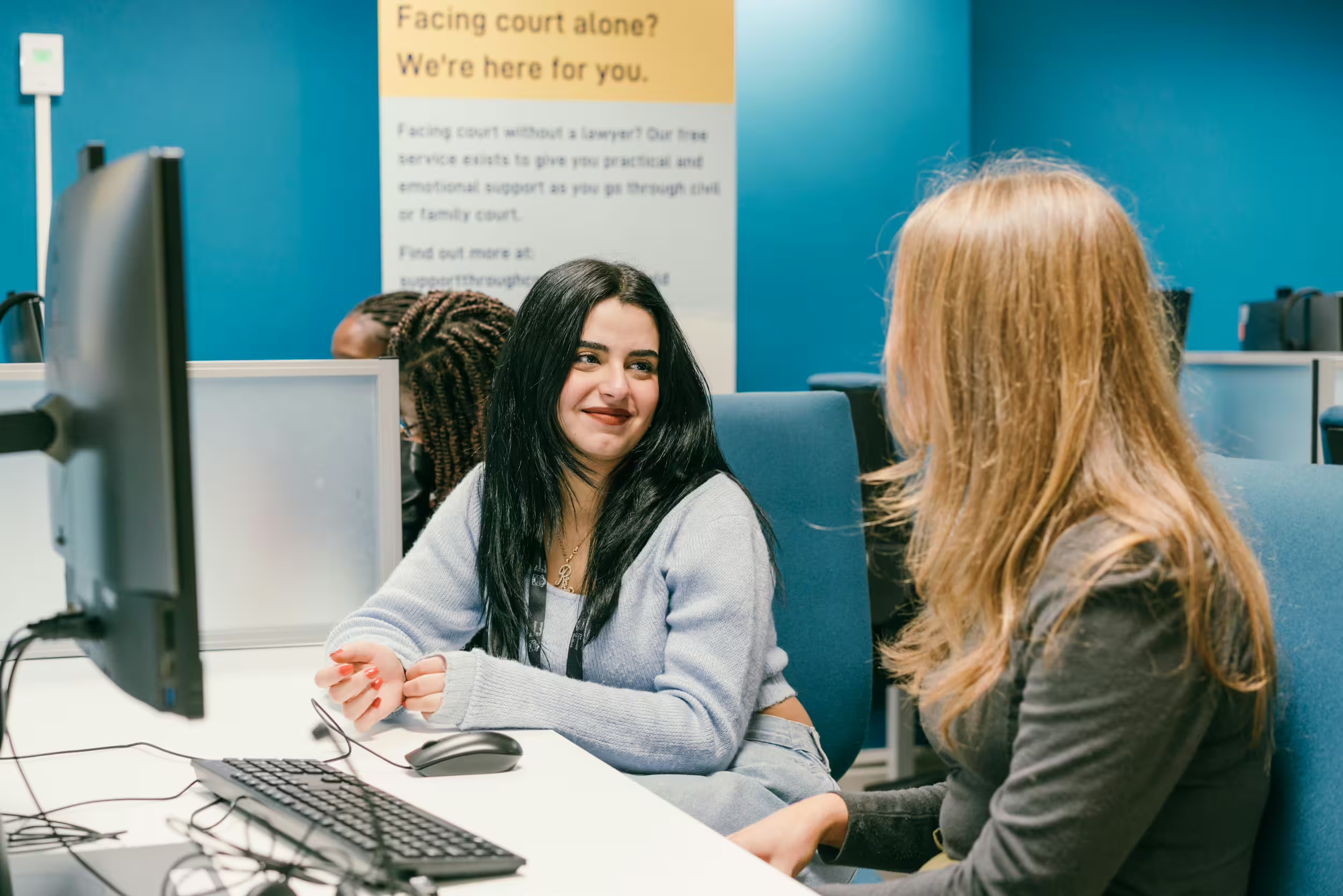
Have you ever wondered what a day of volunteering with Support Through Court looks like? Rob, one of our Manchester volunteers, talks us through his day supporting a client before, during and after her family court hearing at Manchester Civil and Family Justice Centre.
I cycle into Manchester through the woods of Cheadle, along the Mersey River, and then join the mass of students following Oxford Road into the city. I park my bike in the judges’ car park under the Manchester Civil Justice Centre, grab a takeaway coffee and join the queue for security.
While I’m waiting, I check the latest calendar updates that outline the cases for the day, and at the front desk I try to get the hearing room numbers to save time later.
There are two people waiting outside the office. The first person is the client for the 10.00am family court hearing, and the other person has a housing eviction hearing at 10.30am. I advise the second person to go back downstairs and ask for the housing duty solicitor.
I quickly look at the client notes and hear directly from her something of the history of her case. I can see from her documents that it’s her final hearing today, and it is the first time that we’ve had availability to help her. She’s confused as to why the father can apply to extend contact arrangements with their son as there is already an order from 2022 allowing the father contact for 2 hours every other weekend. She has been sent an email by the court with an attachment that she can’t open and is feeling overwhelmed. I managed to open the file, which is the full “bundle” of documents relating to the case. An accompanying note explains that the father’s solicitor had originally left out the domestic abuse findings from the 2022 case.
The client is vulnerable and scared of encountering her ex, the father of her child, in the court room. I check in with the usher and ensure that the client will have screens in court and a separate waiting room.
The Children and Family Court Advisory and Support Service (CAFCASS) officer meets us and discusses her recommendations, which include progressively increasing the contact leading to overnight stays. The client is upset due to the past domestic abuse and the fact that the child will have to travel over 2 hours each way for the home visits. She feels like her ex is trying to regain control of her life, and that he will be a bad influence on their son.
I explain to the client that she will have to describe these objections in her submissions to the court, and she makes a list of points.
The father’s barrister shares with us the father’s position and his ideas for the extended contact. Our client can’t agree and the usher says that we will be called into court in 10 minutes. I nip back to our office and find one of the student volunteers who I brief on the stairs about her case. We sit with the client through the hearing and help her navigate the large bundle.
After a couple of hours of hearing arguments from the barrister and responses from our client, the case is decided. The judgement has gone against the mother, and she is very upset. I sit with her and try to explain the judgement, and next steps that she can take to make the arrangements practical. I check that she has a friend coming to pick her up and ask security to keep an eye on her until her friend arrives.
I sit with the student volunteer while she updates the client record, and we discuss the aspects of family law that we have encountered and how they played out in practice to help the student understand the procedures.
I retrieve my bike and cycle home, reflecting on my day and thinking about the next family who may need someone in their corner on their day in court.
Could you volunteer?
For our volunteers, this is what many of their days can look like. Last year, 67% of our family cases were child-related – a reminder of the importance of the work our volunteers do every day helping people facing court alone. If you found this story interesting and think you could make a difference, we’d love to hear from you.